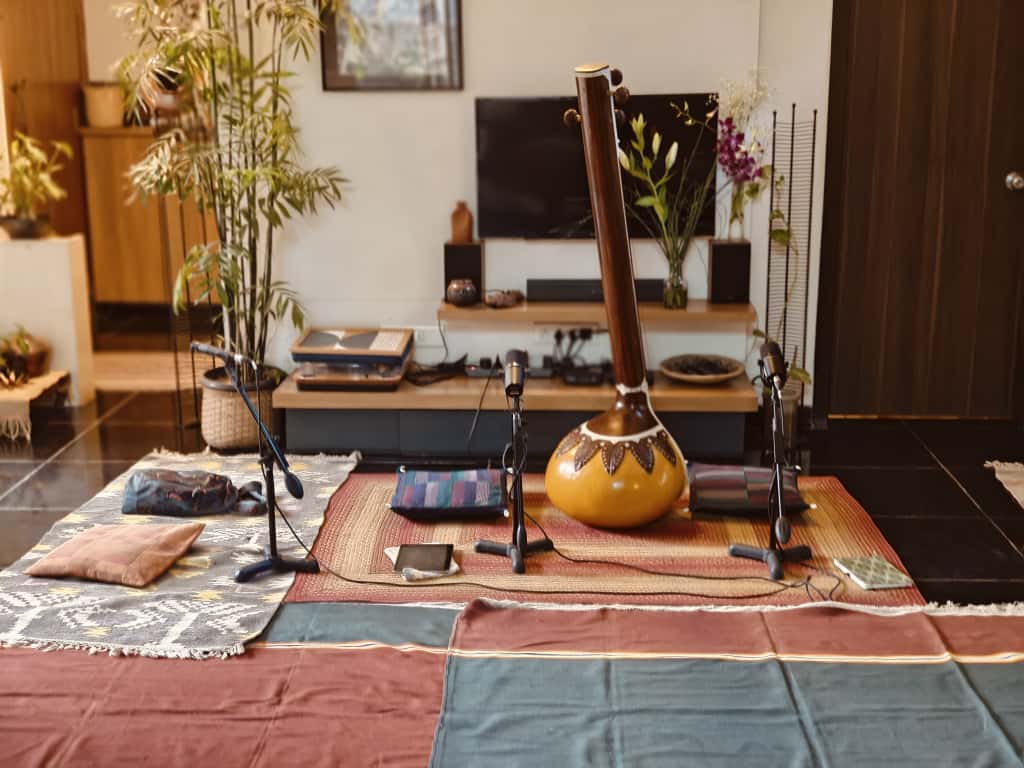
An article on systems thinking triggered this line of thought.
I am aware of enough instances where I have noticed the power of language to shape thinking. Just today, I was speaking about how replacing ‘systems’ with ‘arrangements’ makes a huge difference. For example, when you say political system vs political arrangement or school system vs school arrangement.
The conversation with my team ended here, but something kept lingering in my brain.
While attending the famous Sawai Gandharva Bhimsen Mahotsav, speaking with artists about their performances or friends who had green-room access, the word ‘zone’ repeatedly appeared in conversations. Like, he was in the zone. The zone was perfect. The zone was caught, etc. I was quite nauseated by the usage so frequent that I started ignoring the utterance. Then came a point where I stopped responding. My face was blank when the speaker expected some deep comment or an even deeper hum.
I was experiencing a semantic claustrophobia. It irritates me when people use trendy vocabulary like ‘zone’ to describe the vast landscape of creative preparation; it feels less like communication and more like a reduction.
Now you may say, Why such an intense emotional response to something so small? One may argue that language is for communication, and as long as you understand what the other person was saying, all is well. Not everyone is articulate or has a way with words.
Honestly, I am not being a ‘stickler’ for grammar. I can enjoy a simple conversation with limited words. I am in defence of the depth of human experience. When we use precise language, we honour the reality of the moment. When we use placeholders, we essentially tell the listener that the details don’t matter. In the same nauseating moment, I noticed the root cause of my displeasure.
The first reason is that it is a semantic stop-sign. It literally ends the inquiry.
- If an artist is “in the zone,” we must stop asking what they are feeling.
- Are they in a state of vairagya (detachment)?
- Are they experiencing ekagrata (one-pointed focus)?
- Or are they simply anxious and hiding behind a mask of concentration?
I like it when exact words are used, or sometimes silence is enough. If you don’t find the words, you start looking for them. Sometimes you find them, or sometimes you don’t. The mismatch in the values an artist projects to stand for and the language used is evident when trendy words like ‘zone’ are casually dropped.
Modern words are sometimes just vocabulary without meaning. You say them, but they are not an exact description of the experience. They sound cool, but can hold limited complexity of the experience. For example, a word like ‘zone’ is cool, but it falls too short to communicate anything about a green-room scenario where an artist is tuning instruments.
The second reason is personal: the body language of speakers. Most times, the mismatch between words and body language is very evident. When someone is speaking of absolute dedication to the craft of music, but their entire body signals either arrogance, casual attitude or ignorance, I seem to involuntarily respond to it. Maybe I am attuned to subtext. When the verbal text is “I am humble and dedicated”, but the subtext (posture, tone, eye contact) is “I am performing the role of a star,” my brain experiences a glitch.
When I notice artists busy with hairstyling, makeup, and colour coordination, I become aware of my inner dislike for the show business. For someone who values the process, watching the product being polished before the process feels like a betrayal of the art. We live in an era of ‘vibe-based’ communication, where feelings are broad, and words are vague. When artists speak of ‘zone’, the betrayal is felt strongly.
I hold myself accountable for passing this silent judgment. I question why I feel so, every single time such a thought crosses my mind. Why am I bothered?
I did the same when I heard the word ‘zone’ in these recent conversations. This time, I found an inner pushback. A pushback that is saying no to trivialising deep experiences. A pushback against the mediocrity of expression. A pushback on making everything cool, when sometimes things are just hard, messy and magical.
Leave a Reply